
“We need to take care of what we have, we need to beautify our community.”
-Dyshanique
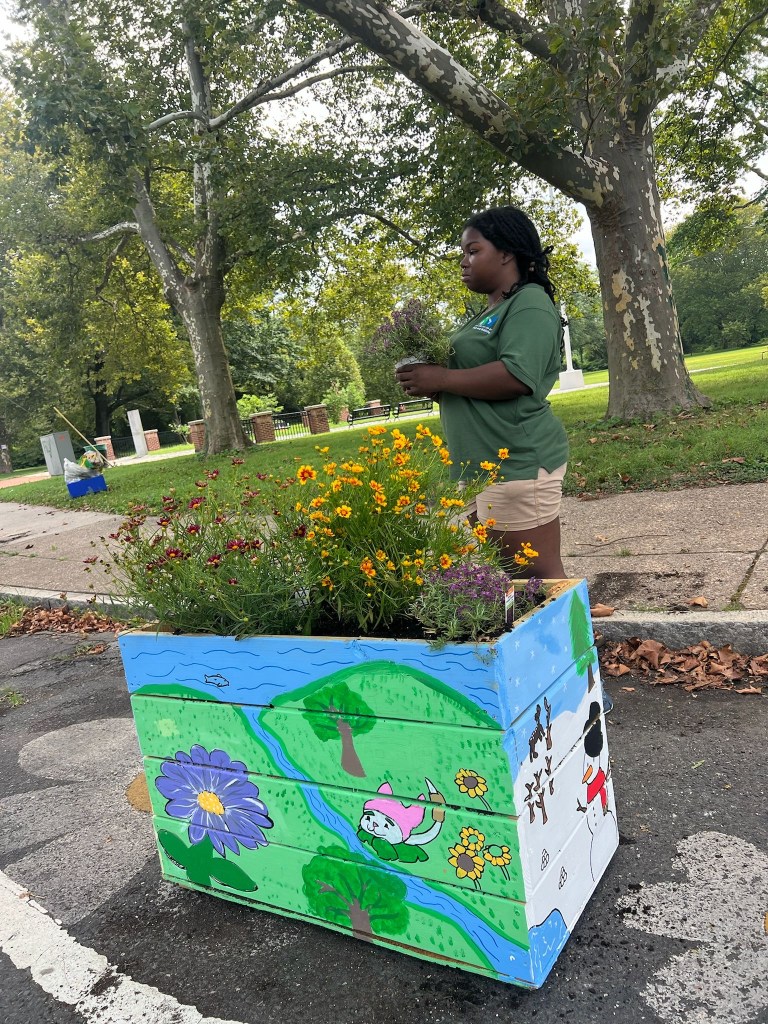
In the aftermath of the pandemic, Dyshanique’s family struggled to go to the store to get fruits and vegetables. So, they cultivated a garden in their backyard. It was in that garden that Dyshanique became interested in working in the environmental field. “We usually split our food between the grocery store and the garden since it doesn’t produce enough for us to live off it completely.”
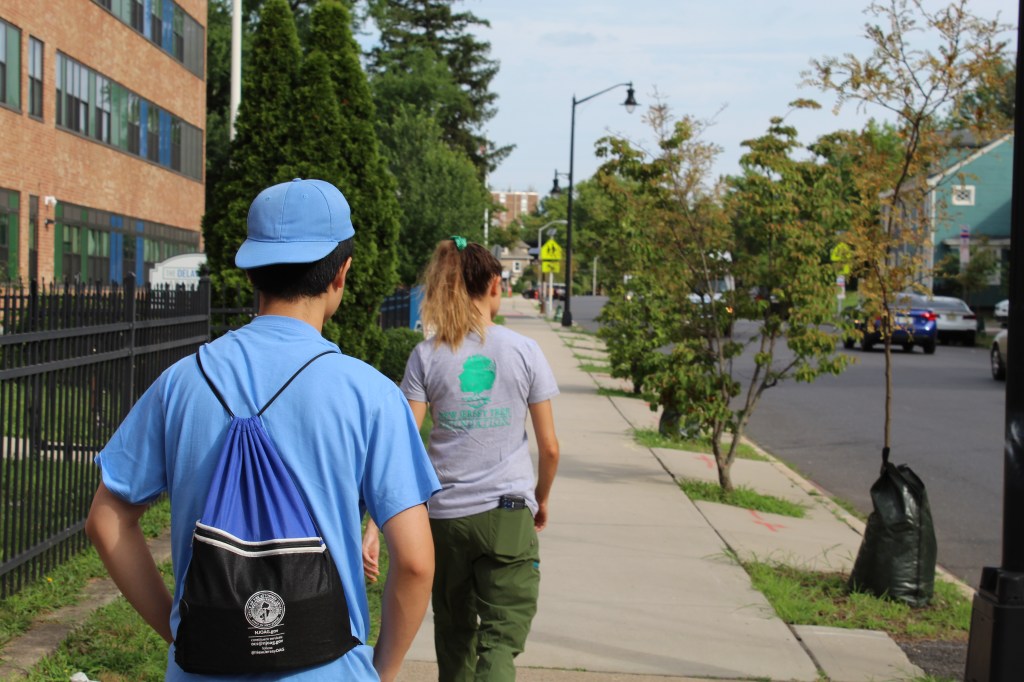
When she isn’t in her garden, you might find her walking through her neighborhood with her mom. “After my whole family fell ill from COVID, we decided to take our health into our hands. So, we started to walk,” she told me. “Over time, we learned that walking was an excellent way to heal.”
Still, there are times when walking through her neighborhood can be challenging. “It feels good to walk around my neighborhood because of the familiarity, but it’s not always safe,” Dyshanique recounted. “Many people are becoming afraid of being outside because of the ICE raids. I sometimes think twice about going on walks, too.”
This is problematic because Dyshanique has often used walks as a way to keep up with the neighborhood: “A lot of the people living in my neighborhood don’t own their homes, so walking helps me keep up with who is moving in and out.” It also creates a sense of connection with the people who live there, many of whom are strong people but, unfortunately, overworked.
“A lot of these people try to do their best by cleaning up in front of their homes,” Dyshanique said. “And that helps encourage me to pick up around my house too.”
She feels like the city needs even more people who care, however: “A lot of people are leaving their homes in worse condition than when they got them,” she said. “This became a problem for my mom and me in our home: when people moved out [in the past] we inherited their pests, and that made life harder for us.”
For Dyshanique, the lack of care manifests most strongly in Trenton’s downtown. What should be a hub of cultural exchange in a safe environment is often wrought with constraints – trash in front of abandoned buildings and curfews, for example. “We don’t have [much] downtown, just a bank, a couple of bodegas, and a weed shop. We need to do better…It feels like a waste of space that is unsafe.”
“We need to take care of what we have,” she told me, “we need to beautify our community.”
She is still committed to her city and, despite the issues, she feels like it gets a bad rap: “Back in the day, Trenton used to be the spot, my mom tells me… And there’s still good in the city, but people passing over the [Pennsylvania] bridge only see the abandoned buildings, trash, and drugs [passing through on their way to work].”
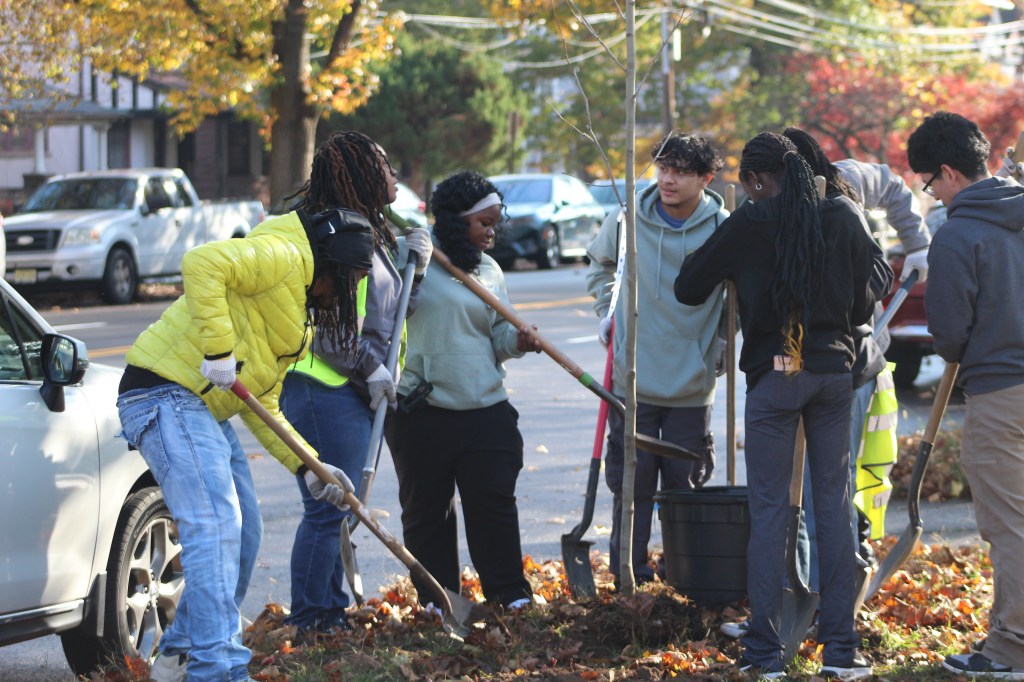
Dyshanique is particularly interested in working to improve natural resource management for communities like Trenton. Initially, she wanted to work with aquatic ecosystems, but her COVID experiences changed that. She wants more people to learn about the environment that they live in rather than getting what they need just to move on. “I want people to have a basic knowledge about Trenton – its history [and ecology] – so that we can maintain what we have before we add more. We have to leave our community in better condition than when we [got here].”
She feels strongly about cultivating pride in Trenton among the city’s youth. “My journalism class helped me learn the rules of [learning how to use journalism to think about how to solve problems where we live],” she told me. “My teacher was also great. She kept it real. Even though she wasn’t from Trenton, she cared a lot about doing [right by the city]. It seems like a lot of people not from Trenton but that lived in worse places are doing a lot to help the city.”
Grown up, Dyshanique wants to be like her grandfather, “He’s a hard worker and an old soul – strong, but very laid back.”
-Harrison
 Field Notes