
“Vacant Land”
That is what the sign said.
I just stood there and scratched my head.
I simply didn’t understand
Why they would call this “vacant” land.
– Mary DeLia
Alarms ring out; brick towers scrape the sky; cars roar through streets; and sirens shout above it all—but life in the city is not free from the throes of nature. At 5:05 AM, on the nose, a symphony of birds breaks out just beyond my window. By 5:20 AM, they’ve dispersed; only the screech of blue jays remains above the rush of the day.
Some areas, however, are silent and still from sunrise to sunset. Many people consider these lots “vacant.” But so-called vacant and abandoned lots can serve as quiet oases—flat or overgrown—for wildlife and people alike, just below the bustle.
A substantial amount of Trenton is abandoned: as many as 10% of all plots across the city are vacant. Many of these plots feature blighted or dilapidated buildings, with owners nowhere to be found—awaiting the day they return to the earth. Other plots have been left compacted and overgrown for years. Tragically, like many cities—from Philadelphia to New York to Boston—Trenton struggles with trash. (And the bigger the city, the bigger the trash problem: our culture of waste has cultivated an aesthetic of litter across America.)
Vacant lots can be strong attractors for free-roaming litter. In response, cities like Trenton aggressively manage empty plots of land. Workers mow monocultures of grasses to less than half an inch. In efforts to keep up appearances, these areas are often stripped of ecological complexity. But life still finds a way: weeds push through cracks in the pavement, pigeons peck surfaced earthworms, and squirrels squirrel away acorns.
A far cry from the pristine lawns of Cadwalader and Hiltonia, abandoned lots harbor scores of wildlife—from birds to insects and mammals like groundhogs.
Once these plots are left behind by their owners and the city mower alike, they enter the early stages of succession—the natural process by which plant communities develop over time. Opportunistic plants (or *weeds*, if you so please) that grow voraciously, seed, and die all in a year begin to populate the disturbed landscape. These species—like crabgrass, crown vetch, garlic mustard, mugwort, and multiflora rose bushes—thrive because the process of laying wood or cement, razing buildings, and later mowing functions a lot like natural disturbances from fires or wind, which create exceptional habitat for annuals.
These early successional lots are well received by the birds and bees. They also create opportunities for native species like butterfly weed, yarrow, penstemon, black-eyed Susans, and bee balm to reclaim green spaces.
This makes abandoned plots exceptional sites to build pollinator meadows. Native species, unlike traditional weeds, send roots deep into the soil. In combination with burrowing insects, like carpenter bees, and active soil dwellers, these adventurous plants can increase the porosity of compacted soil—allowing water and nutrients to move more freely and support plant health.
Over time, these early successional lots can be replaced by slower-growing perennial species like shrubs. Under ideal conditions, these shrubs provide food that benefits from abundant pollinator populations. This, of course, is good for community members as well—particularly those who steward local gardens in need of pollination. These mid-successional lots can also improve air quality, reduce stormwater runoff, and cool ambient temperatures.
Just stopping there would serve a city well, but succession can reach its climax when tree seeds buried by squirrels mature into forests. We recognize the value of forests, but we may not always envision their possibility in an abandoned lot stricken by litter. No longer, then, would the birds I enjoy during the early hours of the day cease their songs before they’ve even begun. Instead, with forests overlaying pristine soils that have grown on abandoned lots, we might enjoy bird songs, groundhog burrows, and fox dens right inside our bustling town centers.
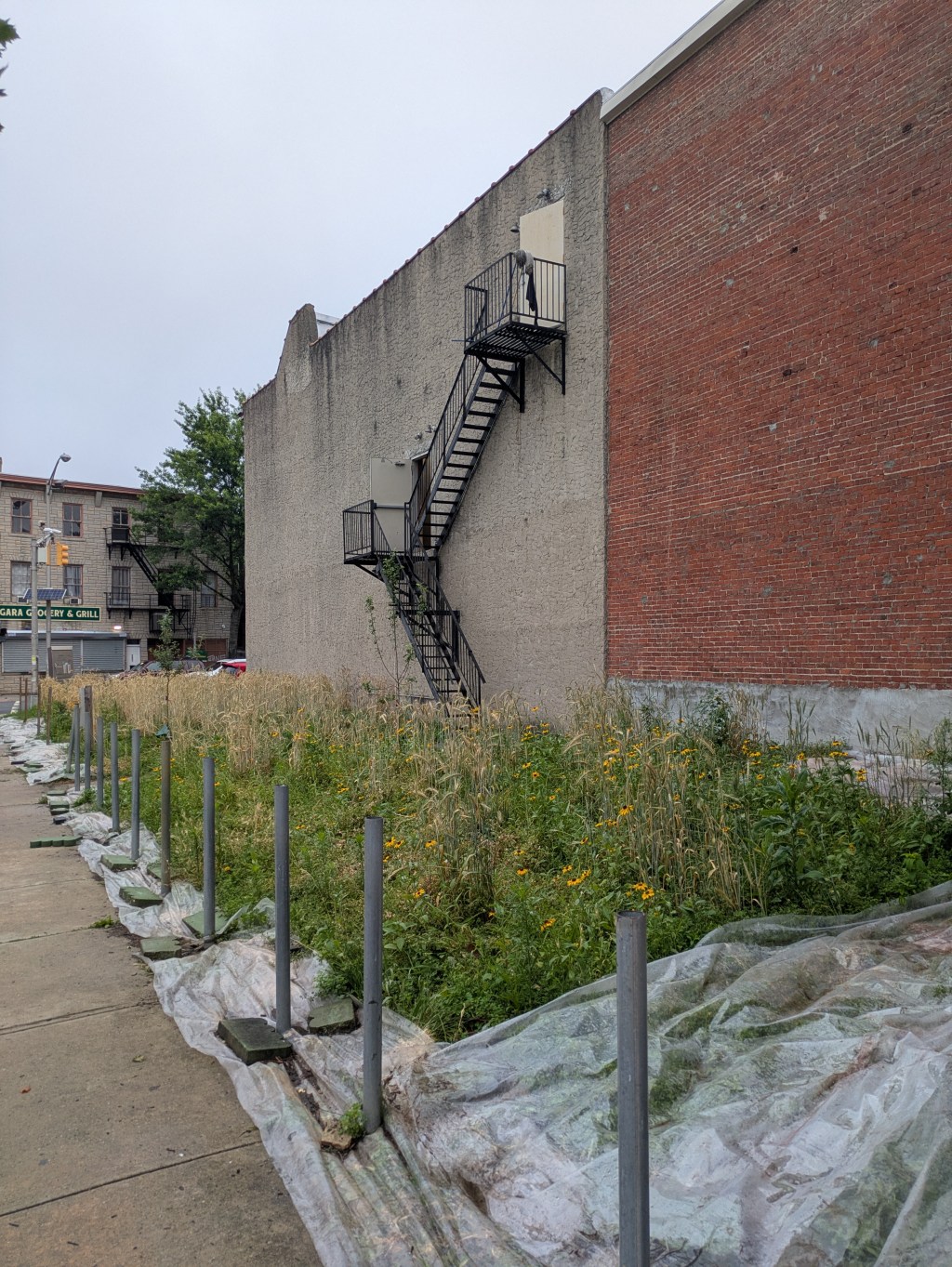
It’s something I aim to achieve with my own meadow project at the corner of Montgomery and Perry Streets in downtown Trenton. Only in its first year, my meadow is a beautiful mix of crown vetch, dandelion, wild bergamot, black-eyed Susans, blazing star, Indiangrass, Virginia rye, plantain weeds, endive, and clover. I see myself as part of that successional process—one that will one day provide insects, birds, mammals, and children a healthy environment to enjoy.
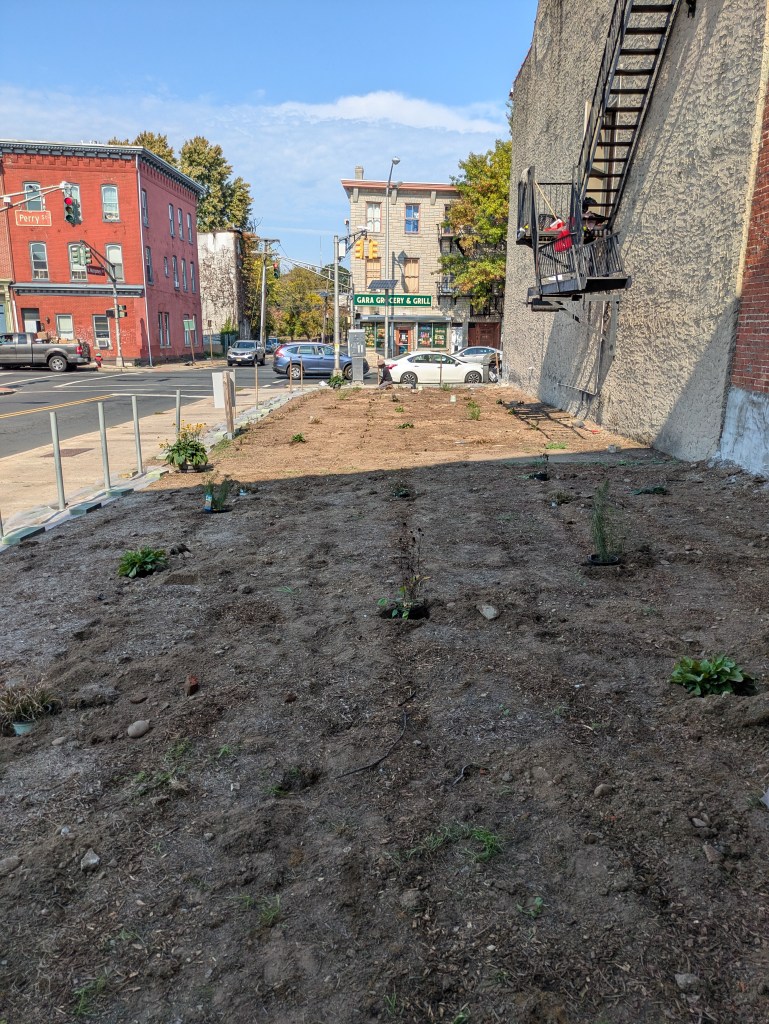
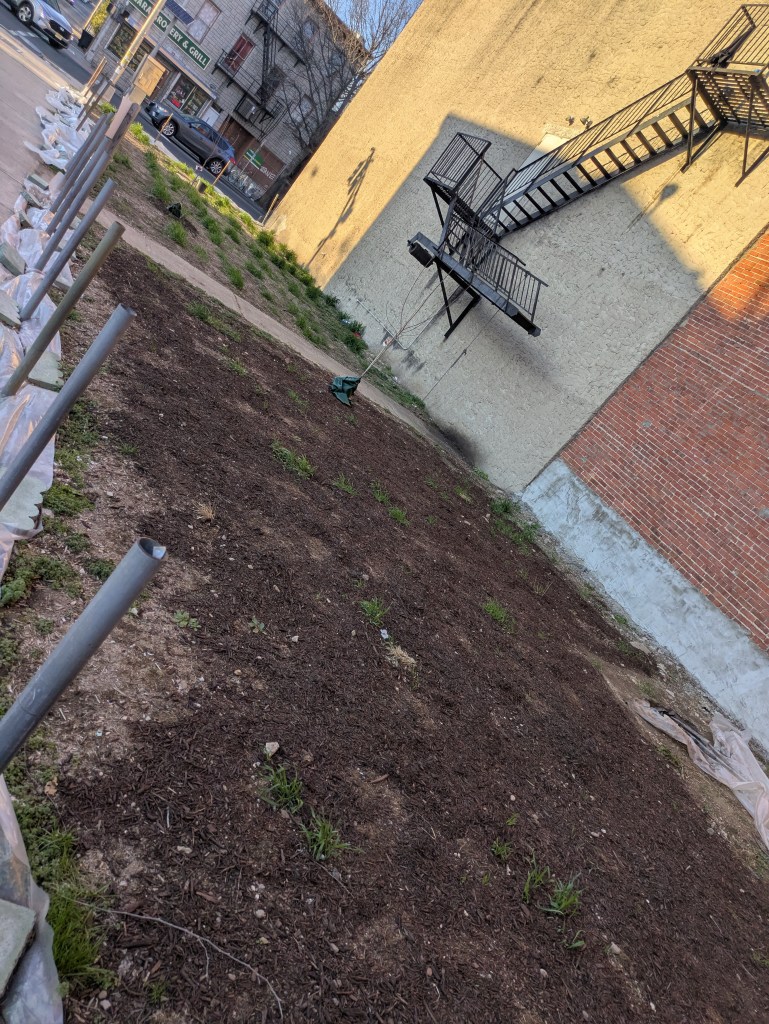
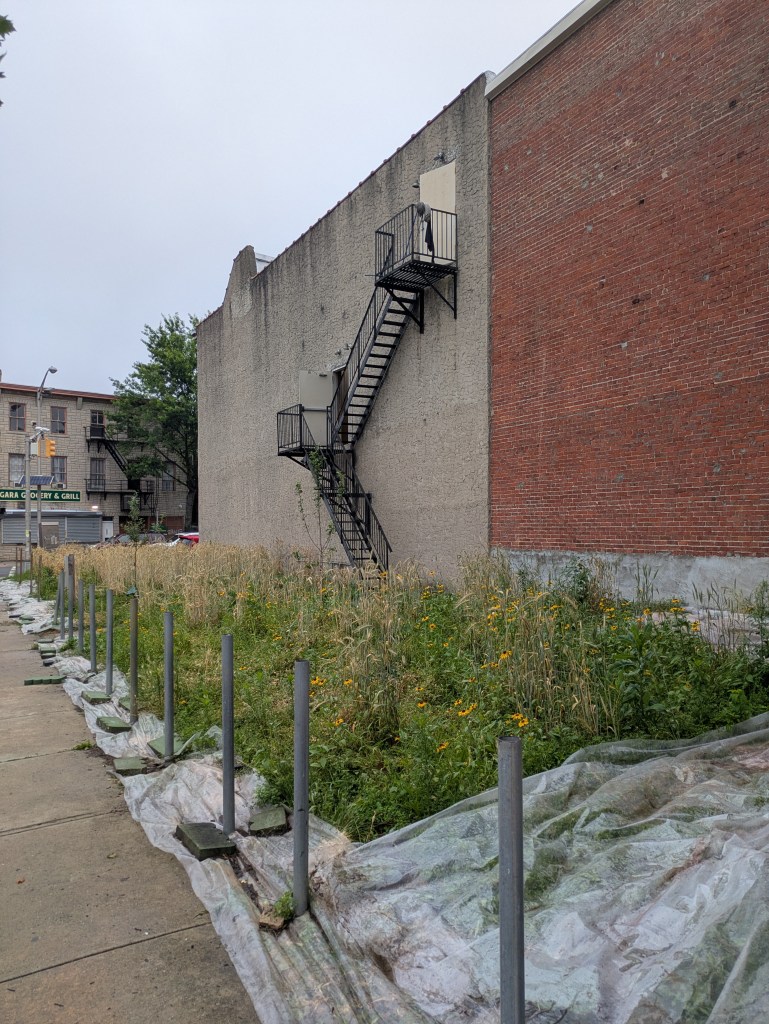
So next time you pass a “vacant” lot, try looking closely—you just might find a world teeming with life.
– Harrison
 Field Notes
Leave a comment